
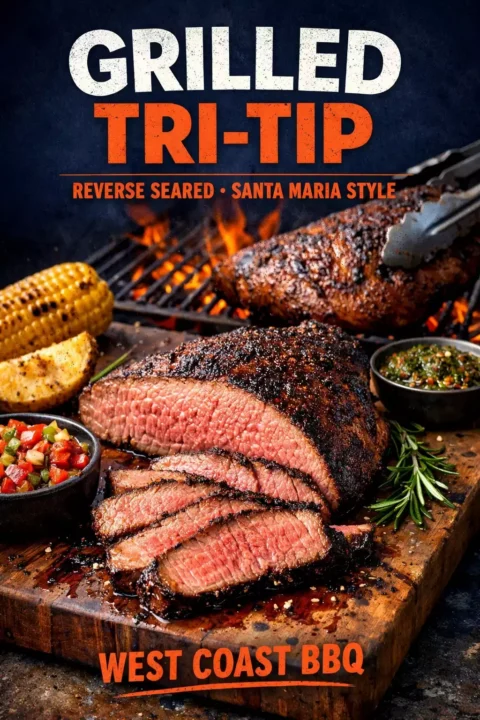
Grilled Tri-Tip
Reverse seared: low heat first, then a hard sear. California BBQ at its best. San Diego style. This is how they do it on the West Coast, and after my first liberty in San Diego, I understood why Calif
Ingredients
- 1 tri-tip roast (2-3 pounds)
- 2 tablespoons kosher salt
- 1 tablespoon black pepper
- 1 tablespoon garlic powder
- 1 teaspoon onion powder
- 1 teaspoon paprika. Optional Santa Maria style: substitute the paprika for 1/2 teaspoon dried oregano and a pinch of cayenne





Off the Galley Mike
Mike — Off The Galley
Six years as a Navy cook on submarines and destroyers, feeding 130 sailors from a galley the size of your bathroom. Now I cook the same big-flavor, no-nonsense food for my family of four — and share every recipe here. No culinary school. No fancy plating. Just real food that works, tested on the toughest critics afloat and the pickiest ones at home.
Grilled Tri-Tip — Reverse Seared, Santa Maria Style, West Coast BBQ
Reverse seared: low heat first, then a hard sear. California BBQ at its best. San Diego style. This is how they do it on the West Coast, and after my first liberty in San Diego, I understood why Californians are so obsessed with this cut. Tri-tip is the West Coast answer to Texas brisket — a single muscle from the bottom sirloin that’s intensely beefy, relatively affordable, and cooks in a fraction of the time.
Why Reverse Sear
The reverse sear is the best method for tri-tip because the cut is thick (2-3 inches at its widest) and tapers to a thin point. Direct heat alone would burn the thin end before the thick end cooks through. Reverse searing solves this: low indirect heat cooks the interior gently and evenly to your desired doneness, then a brief screaming-hot sear creates a flavorful crust without overcooking the inside.
Ingredients
1 tri-tip roast (2-3 pounds), 2 tablespoons kosher salt, 1 tablespoon black pepper, 1 tablespoon garlic powder, 1 teaspoon onion powder, 1 teaspoon paprika. Optional Santa Maria style: substitute the paprika for 1/2 teaspoon dried oregano and a pinch of cayenne.
How to Grill It
Step 1: Season
Season the tri-tip generously on all sides. For best results, season the night before and refrigerate uncovered — the dry brine penetrates the meat and the surface dehydrates, which improves the sear.
Step 2: Indirect heat (the reverse part)
Set up the grill for two-zone cooking. Place the tri-tip on the indirect (cool) side with a probe thermometer inserted into the thickest part. Close the lid and cook at 225-250°F until the internal temperature reaches 120-125°F for medium-rare (about 45-60 minutes depending on thickness). This is below your target final temperature because the sear will add 5-10°F.
Step 3: The sear
Move the tri-tip to the direct heat (hot) side. Sear for 2-3 minutes per side until a dark, caramelized crust forms. You want aggressive heat and char — this is not a gentle step. Total sear time is about 4-6 minutes.
Step 4: Rest and slice
Rest the tri-tip for 10 minutes. This is critical — the temperature continues rising during rest (carryover cooking) and the juices redistribute. Slice against the grain. Tri-tip has two grain directions that meet in the middle, so you’ll need to change your cutting angle halfway through the roast. Cut thin slices (about 1/4 inch) for the most tender result.
The Grain Direction
This is where most people mess up tri-tip. The muscle fibers run in two different directions. Before cooking, identify the grain direction and mark it with a small cut or mental note. After resting, cut the roast roughly in half where the grain directions change, then slice each half separately against its own grain. Slicing with the grain produces chewy, tough bites. Slicing against the grain produces melt-in-your-mouth tenderness.
Temperature Guide
Rare: 120°F pull, 125°F after rest. Red center.
Medium-rare: 125°F pull, 130°F after rest. Pink center. My recommendation.
Medium: 130°F pull, 135°F after rest. Warm pink center.
Don’t go past medium with tri-tip. It’s a lean cut without much marbling, so it dries out quickly at higher temperatures.
Santa Maria Style
Santa Maria BBQ is the traditional Central California style — tri-tip seasoned with salt, pepper, garlic, and sometimes oregano, grilled over red oak. It’s served with pinquito beans, salsa, and garlic bread. This is the origin story of tri-tip as a BBQ cut, dating back to the 1950s in Santa Maria, California. If you can find red oak for your grill, it’s the authentic wood choice.
Serve With
Grilled corn, coleslaw, potato salad, or a simple green salad. Tri-tip also makes incredible sandwiches — slice thin, pile on a French roll with horseradish cream and arugula.
The Overnight Dry Brine
For the absolute best tri-tip, season it the night before and place it uncovered on a wire rack in the fridge. The salt penetrates the meat overnight (dry brining), seasoning it deeply rather than just on the surface. The uncovered refrigeration dehydrates the exterior, which improves the Maillard reaction during the sear and produces a more dramatic, darker crust. This single technique — overnight salt and refrigeration — is the difference between a good tri-tip and an exceptional one.
Chimichurri Pairing
If Santa Maria seasoning is the traditional California approach, chimichurri is the Argentine approach — and it’s spectacular on tri-tip. Finely chop fresh parsley and oregano, mince garlic, and combine with olive oil, red wine vinegar, and red pepper flakes. The bright, herbaceous, garlicky sauce cuts through the richness of the beef and adds a layer of freshness that complements the char from the sear. Spoon chimichurri over sliced tri-tip at the table.
Carryover Cooking
Tri-tip continues cooking after you pull it from the grill. The internal temperature will rise 5-10°F during the rest period. This is why you pull at 120-125°F for a final temperature of 130°F (medium-rare). Pulling at 130°F would result in a final temperature of 135-140°F — closer to medium, which is still fine but less juicy. The thicker the tri-tip, the more carryover you’ll get.
Cost Comparison
Tri-tip runs $8-12 per pound depending on grade and region. A 2.5 pound tri-tip costs $20-30 and feeds 4-6 people. Compare that to a ribeye steak at $18-25 per pound, and the value is obvious — you get comparable beef flavor at a fraction of the price. Tri-tip is a working-class steak cut that tastes like a premium one when cooked properly.
Leftover Uses
Cold sliced tri-tip makes incredible steak sandwiches, salads, and tacos. Reheat gently in a skillet with a splash of beef broth for 2 minutes per side — don’t microwave, as it overcooks the edges. Tri-tip is one of the best meats for meal prep because it tastes equally good at every temperature.
Frequently Asked Questions
Where do I buy tri-tip?
Common on the West Coast, harder to find elsewhere. Ask your butcher — they can cut one from the bottom sirloin. Costco often carries them. If you can’t find tri-tip, a thick sirloin steak or flat iron steak works with the same technique.
Can I smoke tri-tip instead?
Absolutely. Smoke at 225°F until 120°F internal, then sear. The smoke adds another dimension that Santa Maria purists might object to, but tastes incredible.
Weeknight Tri-Tip Strategy
Tri-tip is one of the fastest “impressive” cuts to cook. Unlike brisket (12+ hours) or ribs (5-6 hours), tri-tip goes from fridge to plate in about 90 minutes including prep and rest. Season in the morning before work, grill when you get home. The reverse sear method makes it nearly foolproof — the low-heat phase is forgiving and the quick sear is dramatic but brief.
The Leftovers Advantage
Leftover tri-tip might be more versatile than fresh. Slice it thin for steak sandwiches with horseradish cream and arugula on a toasted French roll. Chop it for tacos or nachos. Slice over a green salad with blue cheese and balsamic. Dice and add to scrambled eggs for a protein-heavy breakfast. One 2.5-pound tri-tip produces enough meat for dinner plus 2-3 lunches. This is meal prep without the boredom of eating the same thing every day — each application feels like a different meal.
The Budget Steakhouse
A date-night dinner of reverse-seared tri-tip, grilled corn, and a simple salad costs about $25 total for two people. The same experience at a steakhouse costs $100+ before tip. Tri-tip gives you the seared crust, the pink center, the beefy flavor, and the impressive presentation at a quarter of the restaurant price. Add a bottle of wine and you’re still under $40 total.
More From Off The Galley
Texas Brisket · Baby Back Ribs · Pulled Pork · Grilled Chicken Thighs · Street Corn Salad