
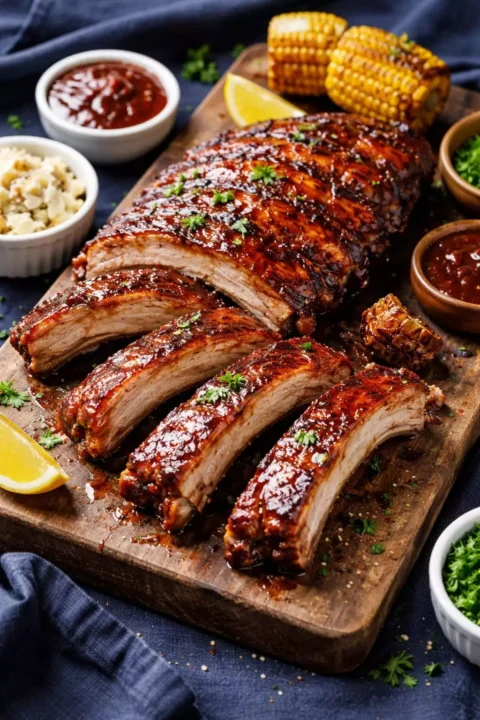
Baby Back Ribs
3-2-1 method. Smoke, wrap, sauce. Fall-off-the-bone every single time. If brisket is the PhD of barbecue, ribs are the bachelor’s degree — still impressive, much more forgiving, and the results come f
Ingredients
- 2 racks baby back ribs
- your favorite BBQ rub (or: 2 tablespoons brown sugar
- 1 tablespoon paprika
- 1 teaspoon garlic powder
- 1 teaspoon onion powder
- 1 teaspoon chili powder
- 1 teaspoon salt
- 1/2 teaspoon black pepper
- 1/2 teaspoon cayenne)
- 4 tablespoons butter
- 4 tablespoons brown sugar
- 2 tablespoons honey
- BBQ sauce of your choice
Method
Step 1: Prep the ribs
-
Remove the membrane from the back of the ribs — slide a butter knife under it at one end, grip with a paper towel, and peel it off in one sheet. This is the most important prep step. The membrane blocks smoke and seasoning and creates a chewy texture. Apply your rub generously on all sides. Let them sit for 30 minutes while the smoker heats up.
Step 2: Three hours of smoke
-
Place the ribs bone-side down on the smoker at 225°F. Close the lid and leave them alone for 3 hours. The bark will develop and the meat will begin to pull back from the bones slightly.
Step 3: Two hours wrapped
-
Lay each rack on a large piece of foil. Place 2 tablespoons of butter, 2 tablespoons of brown sugar, and 1 tablespoon of honey on top of each rack. Wrap tightly in the foil — the butter and sugar will melt and braise the ribs in sweet, buttery liquid. Return to the smoker for 2 hours.
Step 4: One hour with sauce
-
Unwrap the ribs carefully (save the juices for dipping). Brush with BBQ sauce on the meat side. Return to the smoker unwrapped for 1 hour. The sauce will set into a sticky, caramelized glaze.
Off the Galley Mike
Mike — Off The Galley
Six years as a Navy cook on submarines and destroyers, feeding 130 sailors from a galley the size of your bathroom. Now I cook the same big-flavor, no-nonsense food for my family of four — and share every recipe here. No culinary school. No fancy plating. Just real food that works, tested on the toughest critics afloat and the pickiest ones at home.
Baby Back Ribs — 3-2-1 Method, Fall-Off-the-Bone Every Time
3-2-1 method. Smoke, wrap, sauce. Fall-off-the-bone every single time. If brisket is the PhD of barbecue, ribs are the bachelor’s degree — still impressive, much more forgiving, and the results come faster. It’s the most reliable rib method I’ve ever used, and I’ve tried at least a dozen different approaches over the years. The 3-2-1 method is foolproofThe 3-2-1 method is foolproof because it breaks the process into three phases with specific purposes, and the timing works even if you’re not an experienced pitmaster.
The 3-2-1 Method Explained
3 hours: Smoke unwrapped at 225°F. This phase builds the bark and infuses smoke flavor into the meat.
2 hours: Wrapped in foil with butter, brown sugar, and honey. This phase braises the ribs until tender, and the butter-sugar mixture caramelizes into a sweet, sticky glaze.
1 hour: Unwrapped, sauced, back on the smoker. This phase sets the sauce into a tacky glaze and firms up the exterior.
Total time: 6 hours. But the hands-on time is about 30 minutes spread across the day. The smoker does the work.
Ingredients
2 racks baby back ribs, your favorite BBQ rub (or: 2 tablespoons brown sugar, 1 tablespoon paprika, 1 teaspoon garlic powder, 1 teaspoon onion powder, 1 teaspoon chili powder, 1 teaspoon salt, 1/2 teaspoon black pepper, 1/2 teaspoon cayenne), 4 tablespoons butter, 4 tablespoons brown sugar, 2 tablespoons honey, BBQ sauce of your choice.
How to Make Them
1
1Prep the ribs
Remove the membrane from the back of the ribs — slide a butter knife under it at one end, grip with a paper towel, and peel it off in one sheet. This is the most important prep step. The membrane blocks smoke and seasoning and creates a chewy texture. Apply your rub generously on all sides. Let them sit for 30 minutes while the smoker heats up.
2
2Three hours of smoke
Place the ribs bone-side down on the smoker at 225°F. Close the lid and leave them alone for 3 hours. The bark will develop and the meat will begin to pull back from the bones slightly.
3
3Two hours wrapped
Lay each rack on a large piece of foil. Place 2 tablespoons of butter, 2 tablespoons of brown sugar, and 1 tablespoon of honey on top of each rack. Wrap tightly in the foil — the butter and sugar will melt and braise the ribs in sweet, buttery liquid. Return to the smoker for 2 hours.
4
4One hour with sauce
Unwrap the ribs carefully (save the juices for dipping). Brush with BBQ sauce on the meat side. Return to the smoker unwrapped for 1 hour. The sauce will set into a sticky, caramelized glaze.
The Bend Test
When the ribs are done, pick up a rack with tongs at the center. It should bend and the meat should crack on the surface but not fall off the bone. If the meat falls off completely, they’re overcooked (still delicious, just harder to eat). If the rack is stiff and doesn’t bend, they need more time.
Serve With
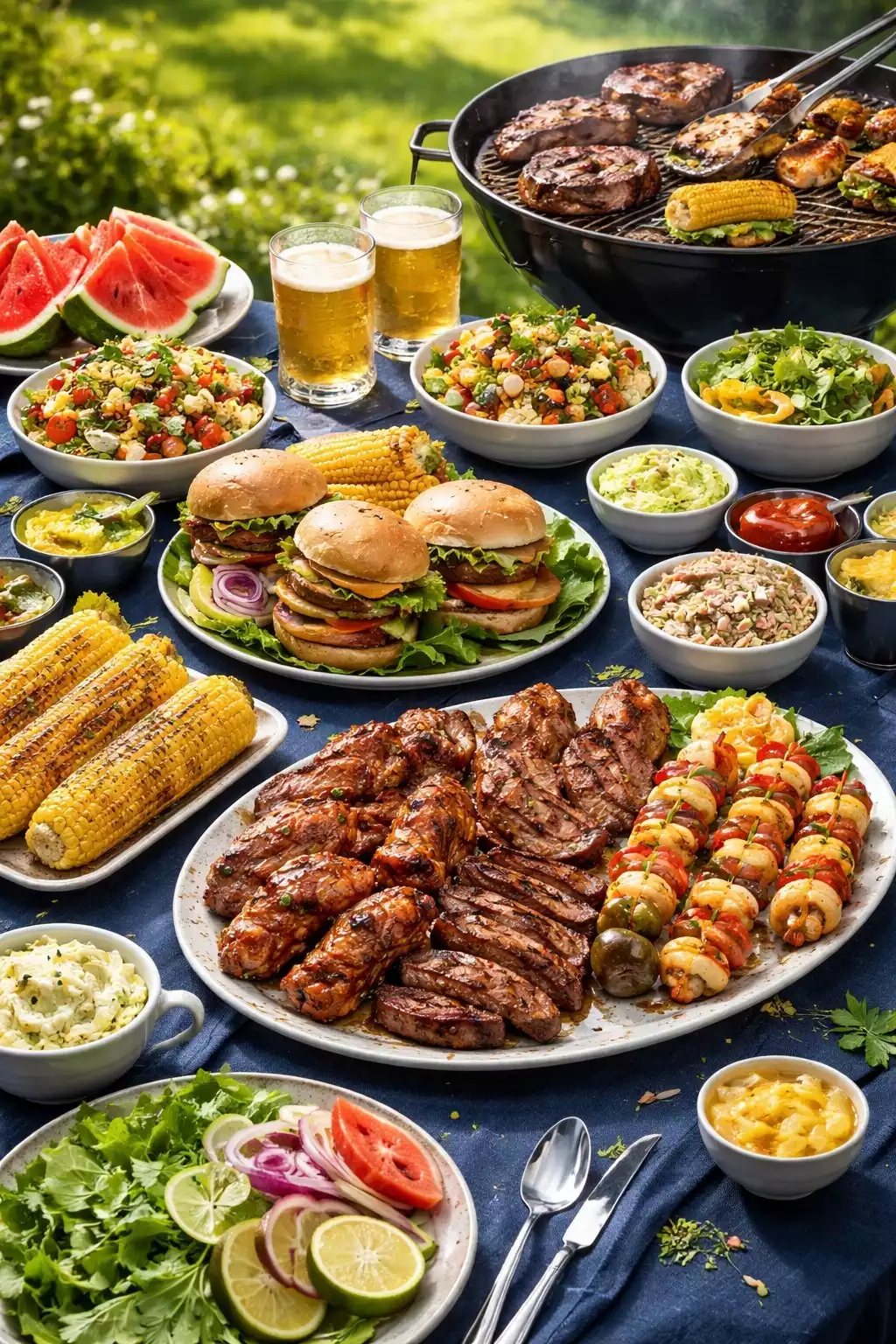
Classic coleslaw, BBQ baked beans, grilled corn on the cob, cornbread, or smoked mac and cheese. This is the full BBQ plate — everything on one tray, eaten with your hands, with a roll of paper towels within arm’s reach.
The Membrane Removal
If you skip removing the membrane, the ribs will still taste good, but the texture on the bone side will be chewy and the smoke and rub won’t penetrate as well. The membrane is a thin, translucent skin on the bone side of the rack. Slide a butter knife or the handle of a spoon under it at one end to lift an edge. Grip the membrane with a paper towel (it’s slippery) and pull firmly — it should peel off in one sheet. If it tears, grab the remaining piece and try again. This takes 30 seconds and makes a noticeable difference in the final product.
The Rub
You can use a store-bought pork rub or make your own. My go-to combines brown sugar, paprika, garlic powder, onion powder, chili powder, salt, pepper, and a small amount of cayenne. The brown sugar caramelizes during the smoke phase and contributes to the dark, sticky bark. Apply the rub generously — more than you think you need, because the surface area on two racks of ribs is significant. Pat the rub firmly into the meat so it adheres.
Some people apply a binder (yellow mustard, olive oil, or hot sauce) before the rub. The binder doesn’t add much flavor — it evaporates during cooking. Its purpose is to give the dry rub something to stick to. I use a thin coat of yellow mustard. You cannot taste it in the final product.
Wood Choice for Ribs
Apple and cherry are the most popular woods for pork ribs — they provide mild, slightly sweet smoke that complements the natural sweetness of the brown sugar rub and BBQ sauce. Hickory is stronger and more traditional, adding a bold, assertive smoke flavor. Pecan falls between fruit wood and hickory — nutty, medium-intensity, and extremely versatile. Any of these work well. Mesquite is too intense for a 6-hour cook and will turn bitter.
Spritzing
Some pitmasters spritz their ribs with apple juice, apple cider vinegar, or a mix of both every hour during the first 3-hour smoke phase. The spritz adds moisture to the surface, helps develop the bark, and adds a subtle fruity tang. It’s optional but recommended. Use a simple spray bottle — 50/50 apple juice and apple cider vinegar is the standard mix.
Temperature and Timing
225°F is the standard smoking temperature for ribs. At this temperature, the 3-2-1 method produces fall-off-the-bone results reliably. You can smoke at 250°F if you’re pressed for time — reduce each phase by about 15-20 minutes. Don’t go above 275°F or the exterior will overcook before the interior tenderizes. The total cook time is 6 hours at 225°F, which means if you want ribs for a 6 PM dinner, start smoking at noon.
Baby Backs vs. Spare Ribs
Baby backs are shorter, leaner, and cook faster. They’re more tender and typically more expensive. Spare ribs are larger, fattier, and have more flavor. For spare ribs, use a 3-2-1 method with slightly longer times on each phase (3.5-2.5-1). Both are excellent — baby backs are easier for beginners.
The Wrapping Liquid
During the 2-hour wrapped phase, the butter, brown sugar, and honey melt together and essentially braise the ribs. Some people add apple juice or apple cider vinegar to the foil packet for additional moisture and a subtle fruity tang. I’ve tested both — the butter and brown sugar alone produce the best results. The apple juice version is slightly too sweet for my taste, but it’s worth trying once to see which you prefer.
Sauce Selection
Use whatever BBQ sauce you genuinely enjoy. Sweet Kansas City-style sauce caramelizes beautifully. Tangy Carolina mustard sauce provides a different but equally excellent flavor. A spicy chipotle-based sauce adds smoky heat. The 1-hour unwrapped phase with sauce sets the glaze into a sticky, lacquered finish regardless of which sauce you use.
Making Ribs for a Crowd
The 3-2-1 method scales perfectly. For 10-12 people, smoke 4-5 racks. The only adjustment is making sure you have enough grill space. Stack ribs using a rib rack (vertical holder) to fit more on the smoker. Rotate racks during the cook so each one gets equal heat exposure. The foil-wrapped phase can happen on a sheet pan in a 225°F oven if you run out of smoker space.
Frequently Asked Questions
Can I do this in the oven?
Yes. Follow the same 3-2-1 method at 225°F in the oven. You won’t get smoke flavor, but the meat will be just as tender. Finish under the broiler for 2-3 minutes to caramelize the sauce.
What wood should I use?
Apple, cherry, and pecan are all excellent with ribs. Hickory works but can be strong — mix with a fruit wood for balance.
How many ribs per person?
Plan for half a rack (6-7 ribs) per adult. A full rack for big appetites.
More From Off The Galley
Texas Brisket · Pulled Pork · Grilled Chicken Thighs · Smoked Wings · Ground Beef Tacos
Off the Galley Mike
Mike — Off The Galley
Six years as a Navy cook on submarines and destroyers, feeding 130 sailors from a galley the size of your bathroom. Now I cook the same big-flavor, no-nonsense food for my family of four — and share every recipe here. No culinary school. No fancy plating. Just real food that works, tested on the toughest critics afloat and the pickiest ones at home.