

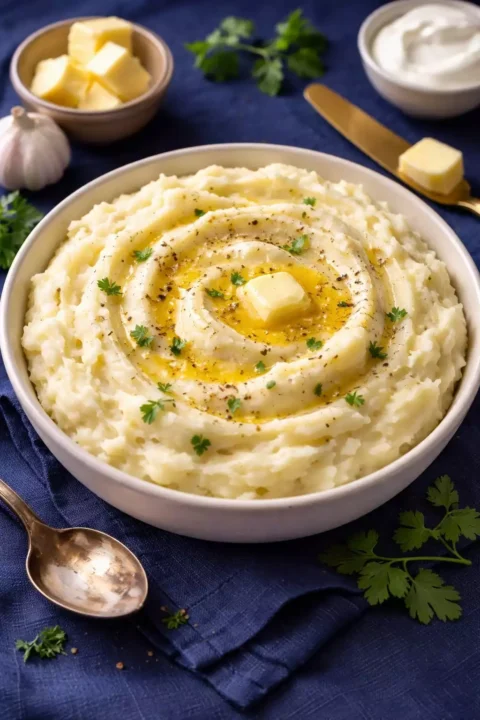
Creamy Mashed Potatoes
I once peeled potatoes for 300 people on a destroyer. Took me four hours and most of my will to live. The upside? I got very, very good at mashed potatoes. I learned what makes them silky instead of g
Ingredients
- 3 pounds Yukon Gold potatoes (about 6-8 medium)
- 1 stick (8 tablespoons) unsalted butter at room temperature
- 3/4 cup whole milk or half-and-half
- 1/4 cup heavy cream
- 1.5 teaspoons salt
- black pepper to taste
- That’s the whole list. I told you this was simple
Method
Step 1: Boil the potatoes
-
Peel and cut the potatoes into roughly equal-sized chunks — about 2 inches. Put them in a large pot, cover with cold water by an inch, and add a tablespoon of salt. Starting with cold water is important — it lets the potatoes cook evenly all the way through. If you drop them into boiling water, the outside cooks faster than the inside.
-
Bring to a boil, then reduce to a steady simmer. Cook for 15-20 minutes until a fork slides through with zero resistance. Drain well. And here’s a step most people skip: put the drained potatoes back in the hot pot and let them sit for 2-3 minutes. This lets excess moisture evaporate. Waterlogged potatoes make watery mash.
Step 2: Warm the dairy
-
While the potatoes are cooking, heat the milk, cream, and butter together in a small saucepan until the butter melts and everything is warm. Not boiling — just warm. This is the single biggest upgrade you can make to your mashed potatoes. Cold milk shocks the hot potatoes and makes them seize up. Warm dairy absorbs smoothly and keeps everything silky.
Step 3: Mash
-
Add the butter first — directly to the drained potatoes — and mash until the butter is incorporated. Butter first coats the starch molecules and prevents them from getting overworked and sticky.
-
Then pour in the warm milk and cream a little at a time, mashing as you go. Stop when they reach your desired consistency. I like mine smooth but not whipped — a few small lumps don’t bother me. Season with salt and pepper. Taste and adjust.



Off the Galley Mike
Mike — Off The Galley
Six years as a Navy cook on submarines and destroyers, feeding 130 sailors from a galley the size of your bathroom. Now I cook the same big-flavor, no-nonsense food for my family of four — and share every recipe here. No culinary school. No fancy plating. Just real food that works, tested on the toughest critics afloat and the pickiest ones at home.
Creamy Mashed Potatoes — Butter Is Not Optional
I once peeled potatoes for 300 people on a destroyer. Took me four hours and most of my will to live. The upside? I got very, very good at mashed potatoes. I learned what makes them silky instead of gluey, fluffy instead of dense, and why some batches taste like a restaurant side and others taste like wallpaper paste.
The difference comes down to three things: the right potato, warm dairy, and knowing when to stop mashing. That’s it. No fancy equipment, no cream cheese, no seven-ingredient situation. Just potatoes, butter, cream, and salt — done right.
Why Yukon Golds Win
You’ll see recipes calling for russets, red potatoes, all kinds of potatoes. I’ve tried them all. Yukon Golds are the sweet spot — they’re naturally buttery and creamy with just enough starch to get fluffy without turning gluey. Russets work too and give you a lighter, more whipped texture, but they’re less forgiving if you overmash them. Red potatoes are waxy and hold their shape, which is great for potato salad but not what you want here.
If you can only find russets, they’ll absolutely work. Just be extra careful not to overwork them.
Ingredients
3 pounds Yukon Gold potatoes (about 6-8 medium), 1 stick (8 tablespoons) unsalted butter at room temperature, 3/4 cup whole milk or half-and-half, 1/4 cup heavy cream, 1.5 teaspoons salt, black pepper to taste.
That’s the whole list. I told you this was simple.
How to Make Them
1
1Boil the potatoes
Peel and cut the potatoes into roughly equal-sized chunks — about 2 inches. Put them in a large pot, cover with cold water by an inch, and add a tablespoon of salt. Starting with cold water is important — it lets the potatoes cook evenly all the way through. If you drop them into boiling water, the outside cooks faster than the inside.
Bring to a boil, then reduce to a steady simmer. Cook for 15-20 minutes until a fork slides through with zero resistance. Drain well. And here’s a step most people skip: put the drained potatoes back in the hot pot and let them sit for 2-3 minutes. This lets excess moisture evaporate. Waterlogged potatoes make watery mash.
2
2Warm the dairy
While the potatoes are cooking, heat the milk, cream, and butter together in a small saucepan until the butter melts and everything is warm. Not boiling — just warm. This is the single biggest upgrade you can make to your mashed potatoes. Cold milk shocks the hot potatoes and makes them seize up. Warm dairy absorbs smoothly and keeps everything silky.
3
3Mash
Add the butter first — directly to the drained potatoes — and mash until the butter is incorporated. Butter first coats the starch molecules and prevents them from getting overworked and sticky.
Then pour in the warm milk and cream a little at a time, mashing as you go. Stop when they reach your desired consistency. I like mine smooth but not whipped — a few small lumps don’t bother me. Season with salt and pepper. Taste and adjust.
The Mistakes That Ruin Mashed Potatoes
Using a food processor or blender. Don’t. The blade breaks down the starch cells and turns your potatoes into glue. A hand masher or potato ricer is all you need.
Adding cold butter and milk. Everything going into the pot should be warm. Cold dairy makes dense, heavy potatoes.
Overmashing. Once they look smooth, stop. Every extra push of the masher makes them stickier.
Undersalting the water. The boiling water is your best chance to season the potatoes from the inside out. If you skip salt in the water, you’ll be chasing that flavor with a salt shaker forever.
Draining and mashing immediately. Let the water evaporate for a couple of minutes first. Patience pays off here.
Variations
Garlic mashed: Throw 4-5 whole peeled garlic cloves into the pot with the potatoes. They’ll soften and mash right in. Roasted garlic is even better if you’ve got 45 minutes — wrap a head of garlic in foil, roast at 400°F, squeeze the soft cloves into the potatoes.
Loaded mashed: Fold in shredded cheddar, crumbled bacon, chopped chives, and a dollop of sour cream after mashing. Basically a loaded baked potato without the baking.
Sour cream and chive: Swap half the cream for sour cream and add a handful of fresh chopped chives. The tanginess cuts through the richness perfectly.
What to Serve With Them
These are the sidekick to just about everything. Classic meatloaf with gravy poured over the top is my number one pairing. Pot roast with the braising liquid spooned over a mound of these potatoes is a close second. Fried chicken with mashed potatoes and country gravy is the kind of dinner that makes people cancel plans to stay home.
Make-Ahead and Reheating
You can make these up to 2 hours ahead. Transfer to an oven-safe dish, dot with extra butter on top, cover with foil, and keep in a 200°F oven until ready to serve. To reheat leftovers, warm on the stovetop with a splash of milk, stirring gently. The microwave works too — add a pat of butter and cover the bowl. Leftover mashed potatoes keep in the fridge for 3-4 days.
Scaling for a Crowd
This recipe feeds 6-8 as a side. For holidays or bigger gatherings, it scales easily — just keep the ratios the same. For 12+ people, go with 6 pounds of potatoes, 2 sticks of butter, 1.5 cups milk, and 1/2 cup cream.
Here’s a pro tip from the galley: when cooking for a crowd, you can make the potatoes up to 2 hours ahead. Transfer them to a slow cooker on the warm setting with an extra pat of butter on top. They’ll hold perfectly until you’re ready to serve. This is how we kept potatoes hot for hundreds of sailors — it works just as well for Thanksgiving.
Frequently Asked Questions
Can I use a hand mixer?
You can, on the lowest speed, for a very short time. But it’s risky — 10 seconds too long and you’ve got gluey potatoes. A hand masher is safer and gives you more control.
Can I leave the skins on?
For Yukon Golds, yes — the skins are thin and add a rustic texture. For russets, no. The thick skin doesn’t break down and you’ll get papery bits throughout.
How much butter is too much butter?
There’s no such thing. But one stick for 3 pounds of potatoes is the right balance of rich without being greasy. If you want to go heavier, I’m not going to stop you.
Restaurant Secrets
Restaurant mashed potatoes taste better because they use more butter and cream than any home cook would dare. The typical restaurant ratio is 1 pound butter per 5 pounds potatoes — far more than most recipes suggest. You don’t need to go that far, but being generous with butter and cream is the single biggest improvement you can make.
More From Off The Galley
Classic Meatloaf · Chicken And Dumplings · Beef Pot Roast · Biscuits And Gravy · Animal Style Burger

Off the Galley Mike
Mike — Off The Galley
Six years as a Navy cook on submarines and destroyers, feeding 130 sailors from a galley the size of your bathroom. Now I cook the same big-flavor, no-nonsense food for my family of four — and share every recipe here. No culinary school. No fancy plating. Just real food that works, tested on the toughest critics afloat and the pickiest ones at home.