
Smoked Wings
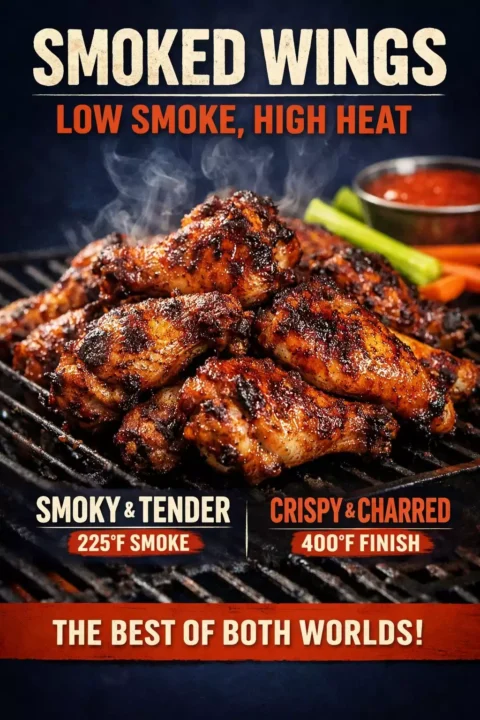
Smoked low, then crisped up over high heat. Best of both worlds. Regular wings are either fried (crispy but no smoke flavor) or smoked (smoky but rubbery skin). These do both: smoke at low temperature
Ingredients
- 3 pounds chicken wings (flats and drumettes separated)
- 1 tablespoon baking powder
- 1 teaspoon salt
- 1 teaspoon black pepper
- 1 teaspoon garlic powder
- 1/2 teaspoon paprika
- your choice of sauce for tossing
Method
-
Pat wings completely dry. Toss with baking powder (helps crisp the skin), salt, pepper, garlic powder, and paprika. Place on the smoker at 225°F for 1 hour using your preferred wood (cherry, apple, or hickory are all great). After 1 hour, increase the smoker temperature to 400°F or transfer wings to a hot grill over direct heat. Cook at high heat for 20-30 minutes, turning every 10 minutes, until the skin is golden and crispy.




Off the Galley Mike
Mike — Off The Galley
Six years as a Navy cook on submarines and destroyers, feeding 130 sailors from a galley the size of your bathroom. Now I cook the same big-flavor, no-nonsense food for my family of four — and share every recipe here. No culinary school. No fancy plating. Just real food that works, tested on the toughest critics afloat and the pickiest ones at home.
Smoked Wings — Low Smoke, Then High Heat for Crispy Skin
Smoked low, then crisped up over high heat. Best of both worlds. Regular wings are either fried (crispy but no smoke flavor) or smoked (smoky but rubbery skin). These do both: smoke at low temperature for deep flavor, then finish at high heat for crackling crispy skin. Once you try the two-phase method, regular baked or fried wings feel one-dimensional. The smoke adds a depth of flavor that no sauce or seasoning can replicate.It’s an extra step, and it’s the difference between good wings and wings that make people ask what you did differently.
Prep Work
Buy whole wings and separate them yourself — it’s cheaper than buying pre-cut flats and drumettes. Use kitchen shears or a sharp knife to cut through the joint between the flat and drumette, and discard the wing tip (or save for stock). Pat the separated wings completely dry with paper towels. Moisture is the enemy of crispy skin, so take your time here. Some pitmasters place the seasoned wings uncovered on a wire rack in the fridge for 2-4 hours before smoking — this dehydrates the skin surface and makes it crisp even better during the high-heat phase.
The Two-Phase Method
Phase 1: Smoke at 225°F for 1 hour. This infuses the wings with smoke flavor and slowly renders some of the fat under the skin.
Phase 2: Crank to 400-450°F (or move to a hot grill section) for 20-30 minutes, flipping once. The high heat crisps the skin and finishes cooking the wings to 165°F internal.
Ingredients
3 pounds chicken wings (flats and drumettes separated), 1 tablespoon baking powder, 1 teaspoon salt, 1 teaspoon black pepper, 1 teaspoon garlic powder, 1/2 teaspoon paprika, your choice of sauce for tossing.
How to Make Them
Pat wings completely dry. Toss with baking powder (helps crisp the skin), salt, pepper, garlic powder, and paprika. Place on the smoker at 225°F for 1 hour using your preferred wood (cherry, apple, or hickory are all great). After 1 hour, increase the smoker temperature to 400°F or transfer wings to a hot grill over direct heat. Cook at high heat for 20-30 minutes, turning every 10 minutes, until the skin is golden and crispy.
Sauce Options
Toss while hot with your choice of sauce: classic buffalo (butter + Frank’s RedHot), BBQ sauce, honey garlic (honey, soy, garlic, rice vinegar), Alabama white sauce (mayo, vinegar, lemon, pepper), or serve dry with a lemon pepper rub.
Why Smoke First
Smoking at low temperature penetrates the meat with smoke flavor that you cannot add later. The smoke ring — that beautiful pink ring just under the surface — only forms at lower temperatures. Once you’ve built the smoke flavor, the high heat finish crisps everything up. Doing it in reverse (hot then smoke) doesn’t work because the skin is already set and the smoke can’t penetrate.
Game Day Strategy
Smoke the wings in the morning and refrigerate them after phase 1. When guests arrive, fire up the grill or smoker to high heat and finish them fresh. The smoke flavor is already locked in, so you’re just crisping and heating. This lets you smoke a huge batch ahead of time and finish them on demand. Pair with baked buffalo wings for a two-style spread.
The Baking Powder Trick
Adding baking powder to the dry rub is the secret to crispy smoked wing skin. Baking powder raises the pH of the skin surface, which breaks down proteins faster during cooking and promotes browning. The result is skin that crisps more aggressively at high heat. Use aluminum-free baking powder — regular baking powder can leave a metallic taste. One tablespoon per 3 pounds of wings is the right ratio.
Smoke Wood Pairing for Wings
Wings absorb smoke quickly because they’re small with a high surface-area-to-meat ratio. This means strong woods like hickory and mesquite can overpower the chicken in just an hour. Cherry and apple are safer choices — they provide clean, mild smoke that enhances without dominating. Pecan is the middle ground — stronger than fruit woods but not as aggressive as hickory.
Making Multiple Sauce Flavors
Here’s the game day power move: smoke all the wings with the same basic dry rub. After phase 2, divide them into batches and toss each batch in a different sauce. One batch buffalo, one batch honey garlic, one batch BBQ, one batch dry lemon pepper. Four wing flavors from one cook with one base recipe. Line up the sauces in bowls, toss each batch right before serving, and arrange on a platter. Serve with celery sticks, carrot sticks, Greek yogurt ranch, and blue cheese dressing.
Dry Rub Variations
The basic rub (salt, pepper, garlic, paprika, baking powder) is versatile and works with any sauce. But you can customize the dry rub for specific flavor profiles: add cumin and chili powder for a Southwest version, add brown sugar and cayenne for a sweet heat version, add onion powder and dried thyme for a more savory version, or add smoked paprika and mustard powder for a deeper, more complex base. The rub is the foundation — the sauce you toss the wings in after cooking builds on that foundation.
Oven Backup Method
No smoker? This two-phase method works in the oven. Place seasoned wings on a wire rack over a baking sheet. Bake at 250°F for 45 minutes (phase 1 — lower temp renders fat slowly). Increase to 425°F for 20-25 minutes until skin is crispy (phase 2). Add 1/2 teaspoon smoked paprika to the rub for a hint of smokiness without the smoker. Not identical to the smoked version, but the two-temperature approach still produces excellent wings with rendered, crispy skin.
Flat vs. Drumette
Every wing has two parts: the flat (two thin bones with meat between them) and the drumette (the mini drumstick). Flats cook faster and have thinner skin that crisps more easily. Drumettes have more meat and a thicker skin that takes longer to render. If you separate them before cooking (which most packages already do), consider pulling the flats off the high heat 2-3 minutes before the drumettes for perfectly even cooking.
Wing Night at Home
The restaurant wing night markup is criminal — $15-18 for 10 wings that cost the restaurant about $3 in ingredients. At home, 3 pounds of wings costs $7-9 and feeds 3-4 people. Add coleslaw, celery, carrots, and dressing for another $5-6. Total wing night for four: about $15. That’s less than one person’s order at a wing restaurant.
Storage and Reheating
Store leftover wings in an airtight container for up to 3 days. Reheat in the oven at 375°F for 10-12 minutes or in the air fryer at 400°F for 5-6 minutes. Microwaving works but turns the skin soft. If you’re reheating sauced wings, add a fresh drizzle of sauce after reheating to brighten the flavor.
Frequently Asked Questions
What wood is best for wings?
Cherry and apple give mild, slightly sweet smoke. Hickory gives stronger, more traditional BBQ flavor. Mix woods for complexity.
Can I skip the smoking phase?
Then you just have grilled or baked wings. The smoke phase is what makes these special.
How many wings per person?
8-10 wings per person as a main dish, 5-6 as an appetizer.
The Competition Wing Method
Competition BBQ teams use a specific technique for wings: smoke at 225°F for 45 minutes, then crank to 350-375°F for 20-30 minutes until the skin renders and crisps, then sauce (if using) during the last 5 minutes for a tacky glaze. The two-temperature approach produces wings with deep smoke flavor AND crispy skin — the holy grail that’s difficult to achieve at a single temperature. Low temperature alone leaves the skin rubbery. High temperature alone doesn’t develop enough smoke. The combination solves both problems.
Making Wings for 20+ People
For a large party, the smoker is the most efficient method. A standard smoker grate holds 4-5 pounds of wings. With multiple racks, you can smoke 15-20 pounds simultaneously. Set up a wing bar: plain smoked wings as the base, with sauces in squeeze bottles (buffalo, BBQ, honey garlic, teriyaki) so guests can sauce their own.
More From Off The Galley
Texas Brisket · Baby Back Ribs · Pulled Pork · Grilled Chicken Thighs · Chicken Enchiladas