


Off the Galley Mike
Mike — Off The Galley
Six years as a Navy cook on submarines and destroyers, feeding 130 sailors from a galley the size of your bathroom. Now I cook the same big-flavor, no-nonsense food for my family of four — and share every recipe here. No culinary school. No fancy plating. Just real food that works, tested on the toughest critics afloat and the pickiest ones at home.
Overnight Oats — Prep Five Jars Sunday, Grab One Each Morning
Prep five jars on Sunday, grab one each morning. Breakfast squared away for the week. Meal prep mentality straight from the galley — when you’re feeding people every day at set times, you learn to prep ahead. Overnight oats are the breakfast version of that philosophy. Five minutes of work on Sunday gives you five grab-and-go breakfasts that are cold, creamy, and surprisingly filling.
The Base Formula
1/2 cup rolled oats, 1/2 cup milk (any kind), 1/4 cup Greek yogurt, 1 tablespoon chia seeds, 1 tablespoon sweetener (honey, maple syrup, or brown sugar). Combine in a mason jar or container, stir, cover, and refrigerate overnight. The oats absorb the liquid, the chia seeds thicken everything, and by morning you have a cold, creamy, pudding-like breakfast.
Five Flavor Ideas
Peanut Butter Banana: Add 1 tablespoon peanut butter and sliced banana in the morning.
Berry: Add mixed berries (fresh or frozen — frozen thaws overnight and creates a jam-like swirl).
Apple Cinnamon: Add diced apple, 1/2 teaspoon cinnamon, and a drizzle of maple syrup.
Chocolate: Add 1 tablespoon cocoa powder and a handful of chocolate chips.
Tropical: Add diced mango, coconut flakes, and a squeeze of lime.
Why Chia Seeds
Chia seeds absorb liquid and create a thick, pudding-like texture. They also add fiber and omega-3 fatty acids. Without them, the oats are thinner and more soupy. One tablespoon per jar is the right amount.
The Science of Overnight Oats
When oats sit in liquid overnight, the starch granules absorb moisture and swell, creating a soft, creamy texture without any cooking. The chia seeds absorb even more liquid and form a gel that thickens everything into a pudding-like consistency. The Greek yogurt adds creaminess, protein, and a slight tang. Together, these three components create a breakfast that’s cold, creamy, and substantial — like a healthy dessert disguised as breakfast.
Container Options
Mason jars (16 oz) are the classic choice — they’re the right size, they seal well, and they look good. But any container with a lid works: plastic deli containers, meal prep containers, or even a regular bowl covered with plastic wrap. The key is a tight seal to prevent the oats from drying out and absorbing fridge odors. I use wide-mouth mason jars because they’re easier to eat from directly without getting oats stuck in the shoulder of the jar.
The Milk Choice
Any milk works: whole, 2%, skim, almond, oat, coconut, soy. Whole milk produces the creamiest result. Oat milk is a close second. Almond milk works but is thinner — use slightly less or add an extra tablespoon of yogurt. The choice depends on your dietary preferences and what you have in the fridge.
Sweetener Notes
Honey, maple syrup, and brown sugar all work. Start with 1 tablespoon per jar and adjust to your preference. If you’re adding sweet toppings (berries, banana, chocolate chips), you can reduce or skip the sweetener entirely — the fruit provides enough sweetness for most people.
The 5-Day Rotation
Making five identical jars is boring. Here’s how to keep variety without extra effort: make all five jars with the same base (oats, milk, yogurt, chia, sweetener), but customize each one with a different topping combo. Label the lids with a marker. Monday: PB banana. Tuesday: mixed berry. Wednesday: apple cinnamon. Thursday: chocolate. Friday: tropical. Same 5 minutes of prep, five different breakfasts.
Meal Prep System
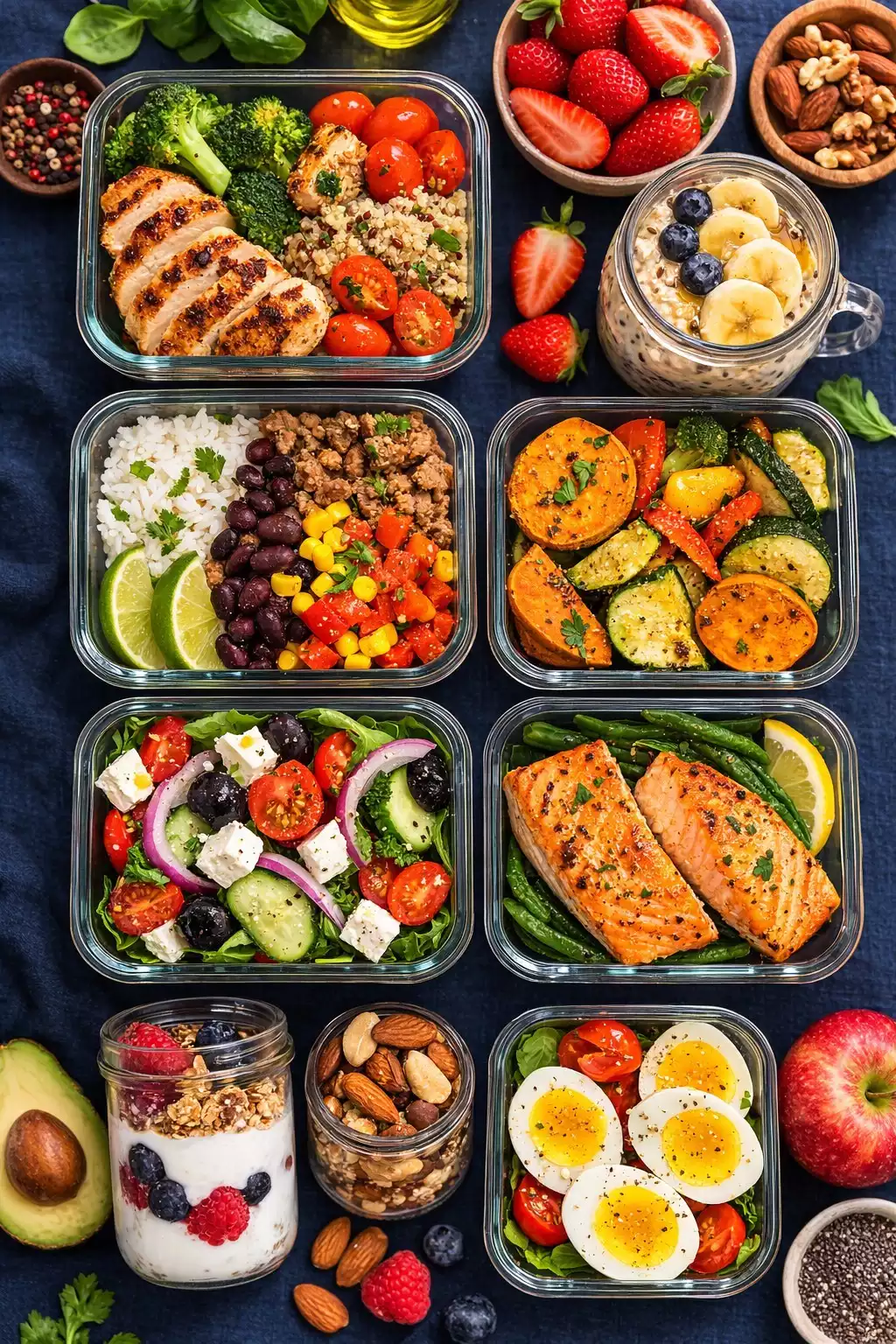
Line up five mason jars on the counter. Add the base ingredients to each. Customize with different flavors — you’ll have variety all week. Total prep time: about 5 minutes. Store in the fridge for up to 5 days. Add fresh toppings each morning.
Frequently Asked Questions
Can I heat these up?
Yes. They’re designed to be eaten cold, but you can microwave for 1-2 minutes for warm oats. Add a splash of extra milk before heating.
Can I use instant oats?
Use rolled oats (old-fashioned). Instant oats become too mushy. Steel-cut oats are too firm — they don’t soften enough overnight.
Are these actually filling?
Yes. The combination of oats, chia seeds, yogurt, and milk provides complex carbs, protein, fiber, and fat. One jar keeps me full until lunch.
The Mason Jar System
Wide-mouth mason jars (16 oz) are ideal because the wide opening lets you eat directly from the jar with a spoon. Line up five jars on the counter, measure the base ingredients into each, customize with different flavors, and you’re done for the week. Label each jar with the flavor if you’re making different ones (I use masking tape) so you know what you’re grabbing at 6 AM when your brain hasn’t started yet.
The Ratio Matters
The 1:1 ratio of oats to liquid is the sweet spot. Less liquid = too thick, almost paste-like. More liquid = too thin, like cold oatmeal soup. The yogurt adds creaminess and protein. The chia seeds absorb additional liquid and create that pudding-like thickness. Don’t skip the chia — without them, the texture is thin and unappetizing.
Flavor Rotation
Making the same flavor five days in a row gets boring by Wednesday. Here’s my weekly rotation:
Monday: Peanut butter banana (add PB and sliced banana in the morning).
Tuesday: Mixed berry (add frozen berries the night before — they thaw and create a jam-like swirl).
Wednesday: Apple cinnamon (dice an apple, add cinnamon and maple syrup).
Thursday: Chocolate (cocoa powder and chocolate chips).
Friday: Tropical (coconut flakes, diced mango, lime zest).
Why This Works for Busy Mornings
Galley mentality — when you’re feeding people on a schedule, you prep ahead. These oats require zero morning effort. Grab, eat, done. No cooking, no dishes, no decisions. On mornings when I’m running late, I eat them in the car (don’t tell my wife). On normal mornings, I eat at my desk. Either way, I’ve had a solid breakfast with protein, fiber, and complex carbs before 7 AM.
Nutritional Breakdown
Per jar (base recipe without toppings): approximately 300 calories, 12g protein (from yogurt and chia), 45g carbs (from oats), 8g fiber, 8g fat. Add peanut butter and the protein jumps to 20g. This keeps you full until lunch without the blood sugar crash that comes from a bagel or sugary cereal.
Why 450°F Matters
High heat is essential for two reasons: it crisps the batter coating quickly (before the cauliflower steams and gets soggy from the inside), and it promotes browning for better flavor. At lower temperatures, the coating stays pale and soft. 450°F gives you the closest thing to fried texture without actually frying. The parchment paper prevents sticking and makes cleanup effortless.
The Buffalo Sauce Formula
Classic buffalo sauce is just two ingredients: Frank’s RedHot and melted butter. The ratio is 2:1 — 1/2 cup hot sauce to 1/4 cup melted butter. Whisk together. That’s it. Don’t overthink it. Frank’s provides the vinegary heat, butter provides the richness that makes you want to eat more. If you want it spicier, add cayenne. If you want it milder, increase the butter ratio.
For the Non-Believers
If someone in your life says “I don’t eat cauliflower,” don’t announce what these are. Just put them on the table and call them “buffalo bites.” Wait until they’ve eaten six before revealing the truth. This approach has a 100% success rate in my experience. The buffalo sauce is such a strong flavor that the cauliflower is genuinely undetectable unless you’re specifically looking for it.
More From Off The Galley
Air Fryer Chicken Tenders · Turkey Smash Burger · Protein Chicken Bowl · Air Fryer Fries · Grilled Tri Tip
Off the Galley Mike
Mike — Off The Galley
Six years as a Navy cook on submarines and destroyers, feeding 130 sailors from a galley the size of your bathroom. Now I cook the same big-flavor, no-nonsense food for my family of four — and share every recipe here. No culinary school. No fancy plating. Just real food that works, tested on the toughest critics afloat and the pickiest ones at home.